Introduction: Choosing a soldering tip for a heavy joint is really a question about how heat moves from the heater into the solder, and tip geometry controls that path.
When a joint has a large copper pad, a thick ground plane, or a heavy pin, a small pointed tip can feel like it is doing nothing. Heat spreads away faster than the tip can replace it. this guide explains how tip shape, contact area, thermal bridging, and tip mass affect heat transfer, and why tip series matching matters when a technician moves to a heavy-duty soldering station.
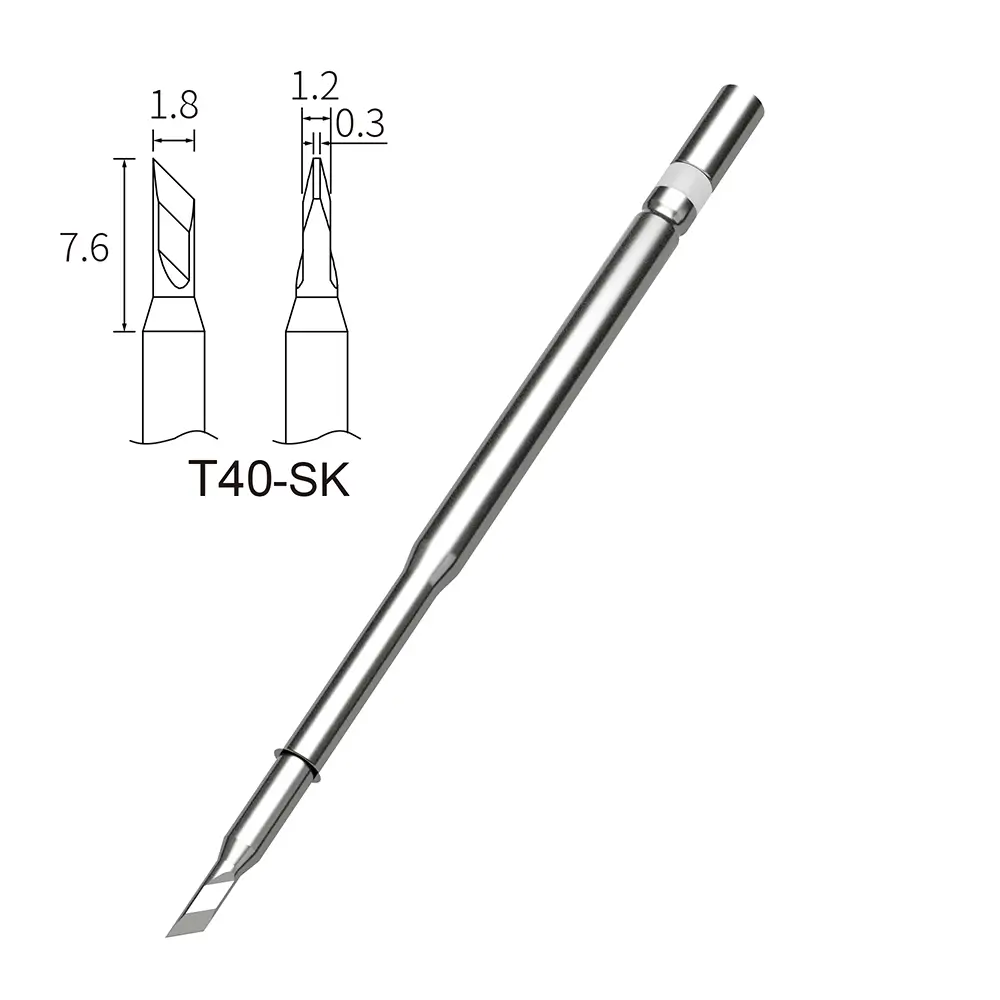
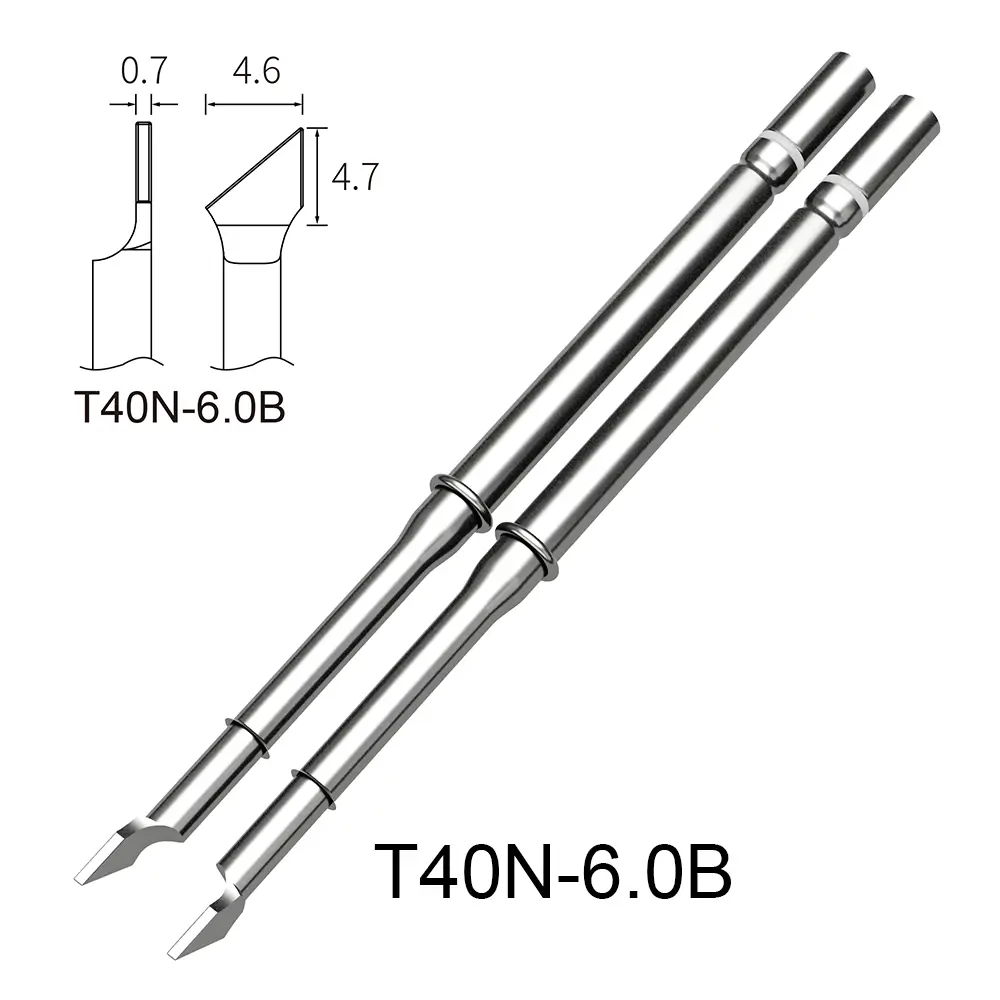
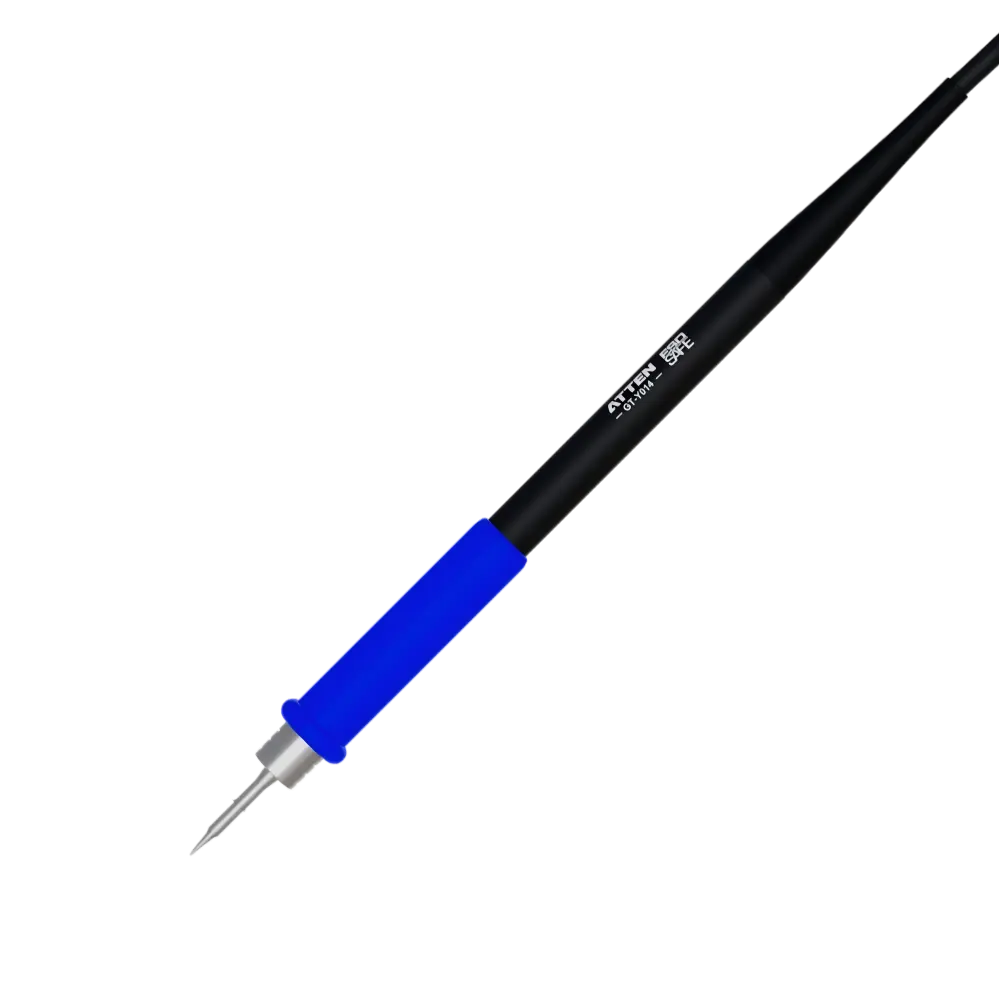
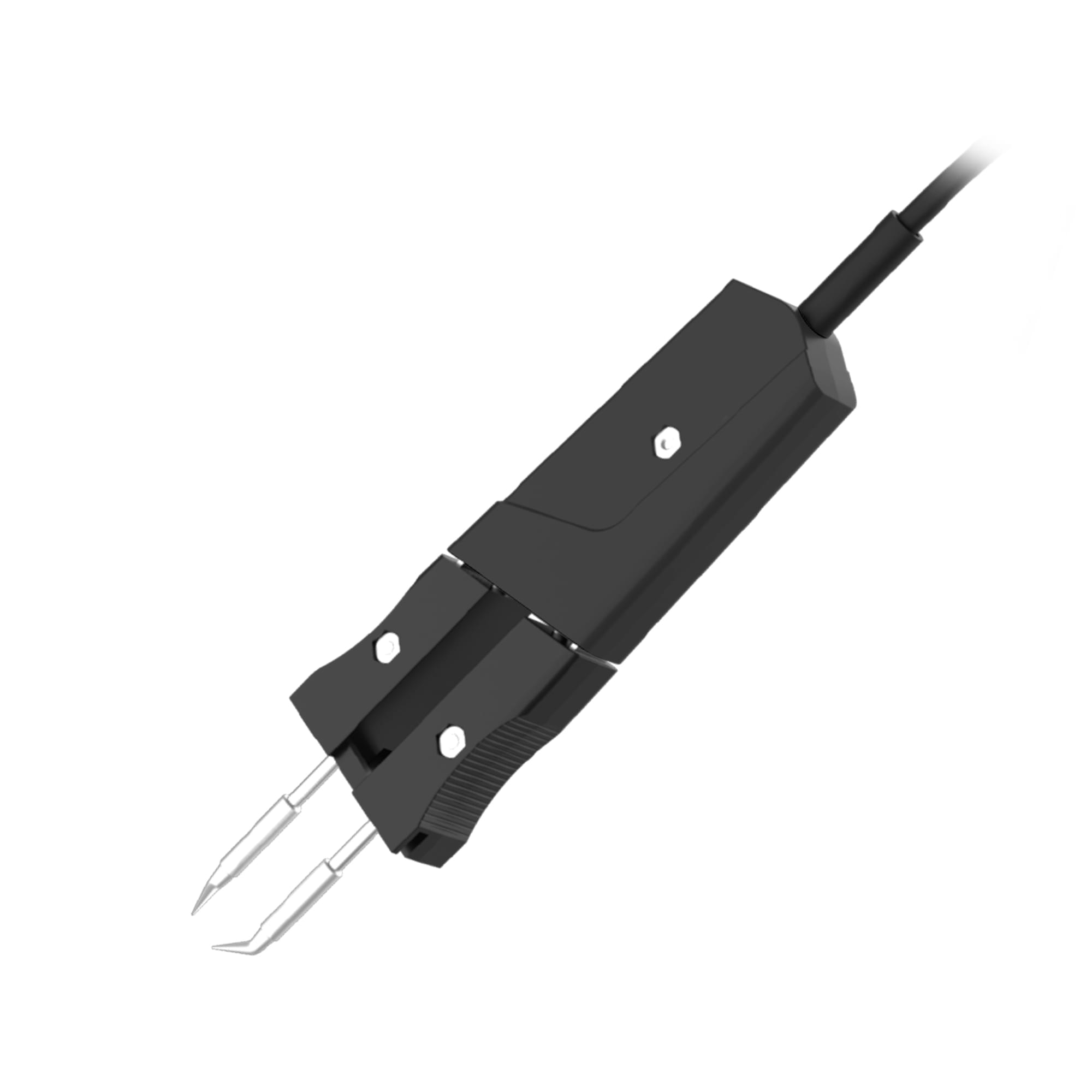
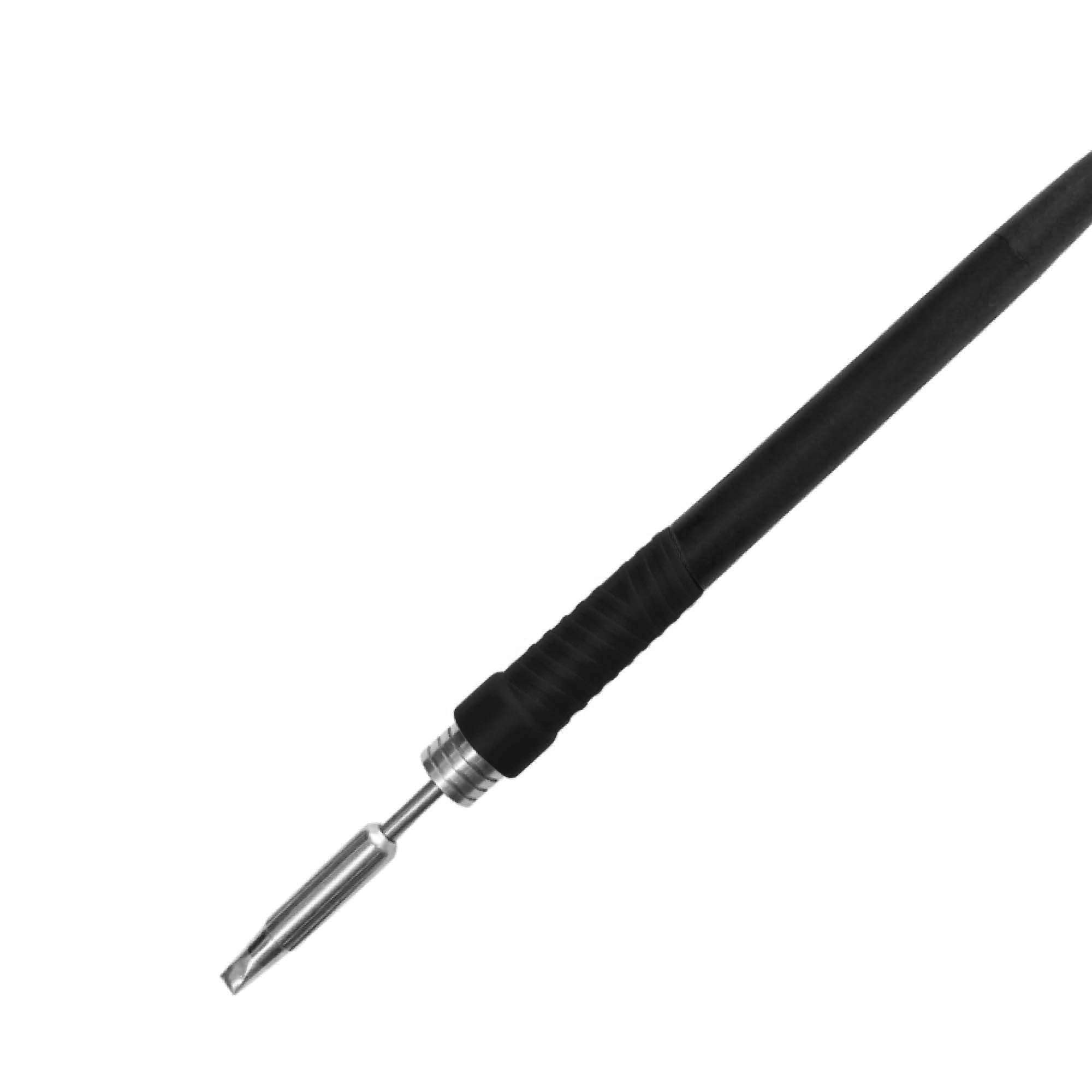
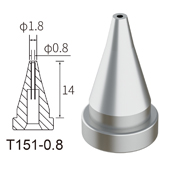
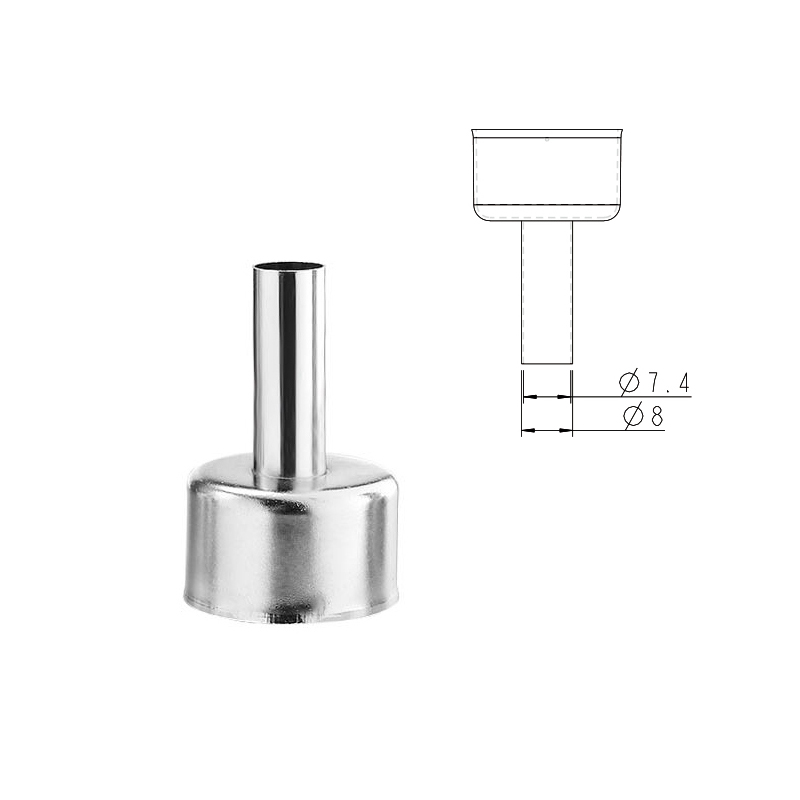
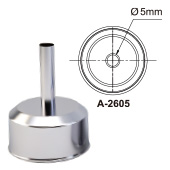
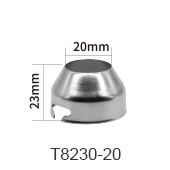
Tip geometry is the first thing that changes heat transfer because it decides how much of the tip actually touches the joint. A fine conical tip meets a pad at a small point. A chisel or knife tip presents a wider face that can sit against a pad or drag along a row of pins. Heat still travels from the heater through the tip body to the plating and into the solder, but the shape controls the size of the exit door. NASA workmanship guidance for manual soldering treats heat transfer and thermal profile control as central to a reliable connection, and the tip shape is part of that control. Geometry also changes the thermal path inside the tip. A thicker blade carries more metal from the heater to the working face, so it can move heat quickly across a short, wide path. A slender tip has less metal and a longer, narrower path, which limits how fast heat arrives at the joint. This is why two tips that fit the same handle can behave very differently on the same pad. The shape is not just about access. It is about how much heat can flow, how fast, and where that heat lands.
A heavy joint acts like a heat sink. The copper around the pad, the inner layers, and the mass of the component lead all pull heat away from the solder point. The iron must replace that heat faster than the joint removes it. Contact area and thermal bridging are the two practical levers a technician controls through tip choice. IEC 61188-1-2 covers general industrial soldering and assembly requirements, and it reflects the same reality: a soldered connection depends on heat reaching the joint in a controlled way, not just on a hot iron.
A wider contact face spreads heat across a large pad instead of concentrating it at one point. When a chisel or knife tip presses against a heavy pad, the molten solder can wet across the full contact face and form a broad thermal bridge. That bridge carries heat from the tip into the pad, the lead, and the solder simultaneously. The result is faster melting and less need to hold the iron in place for a long time. On a high thermal capacity joint, that wider contact often makes the difference between a joint that flows and a joint that stays grainy and cold. The same idea explains why many technicians reach for a broader tip when they see a large ground pad.
Tip mass works like a small heat reservoir. A tip with more metal stores more heat near the working face, so when it touches a cold joint, the temperature at the contact point drops less. After the joint is made, the tip recovers faster because the stored heat is already close to the surface. This matters on a bench where a technician makes one heavy joint after another. Purdue's soldering safety guidance describes practical tip use and bench temperature adjustment, and the same everyday behavior shows up in recovery: a light tip may need more time between heavy joints, while a heavier tip holds its working temperature more steadily. Mass is not unlimited, though. A very large tip can block the view or make fine work harder, so the goal is enough mass for the joint, not the biggest tip available.
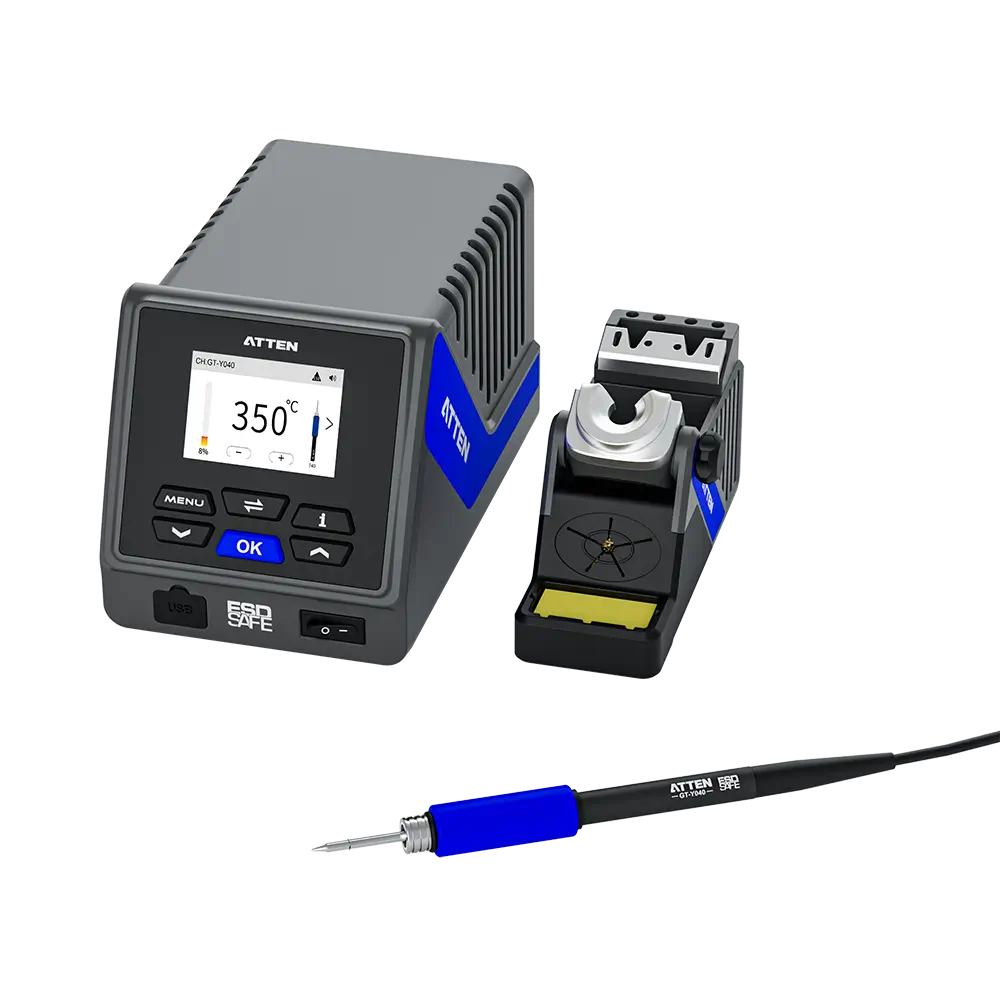
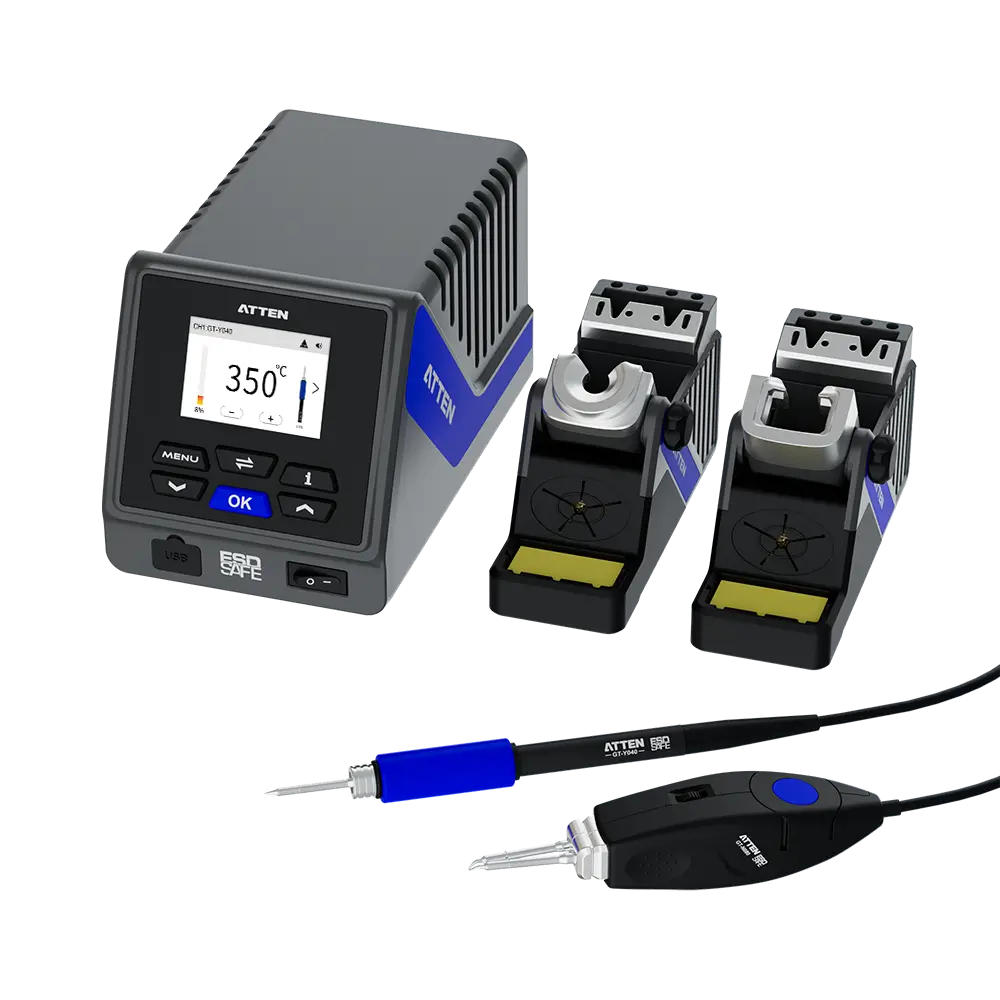
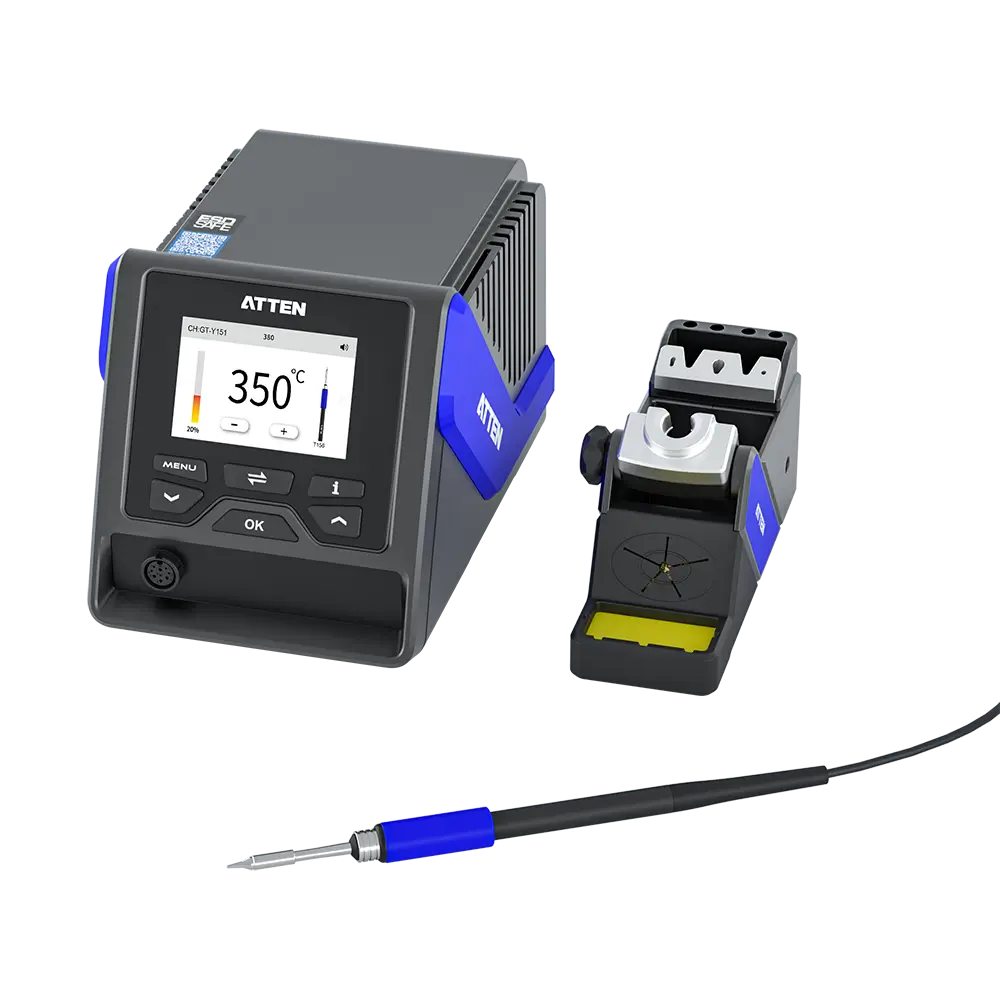
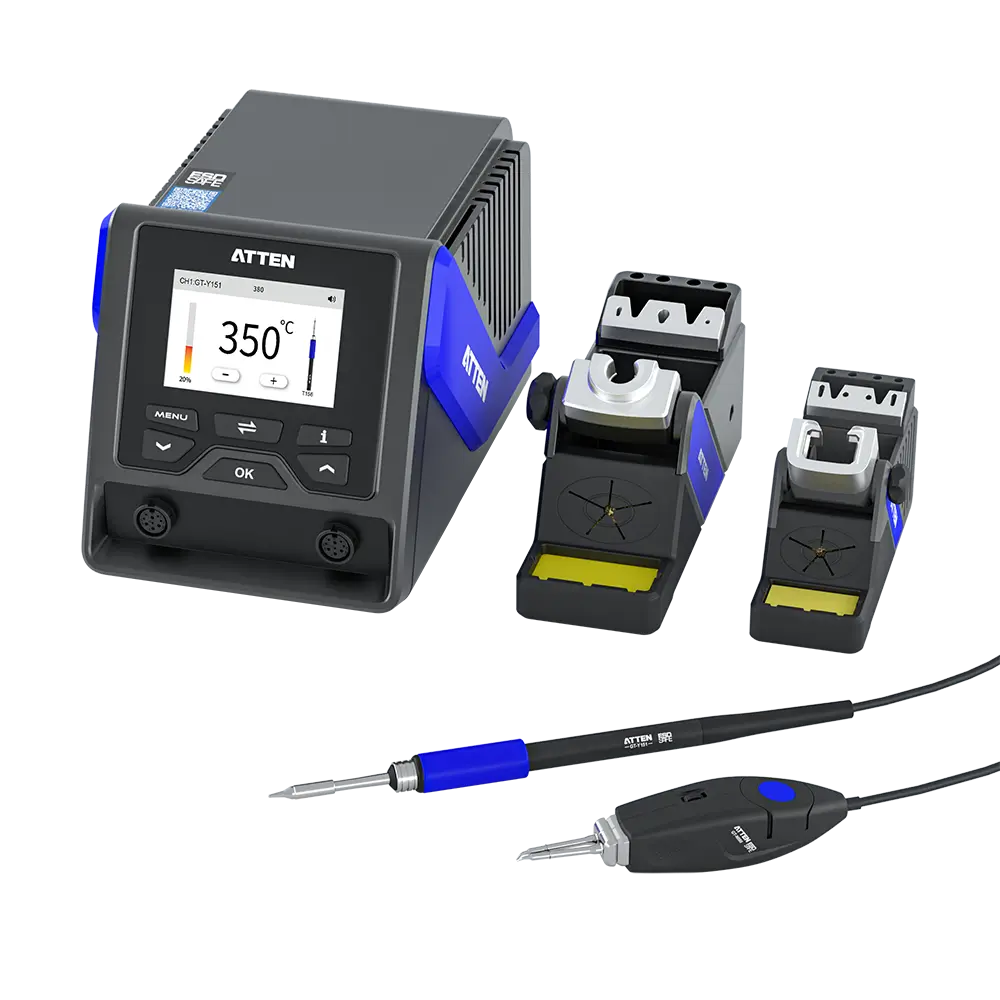
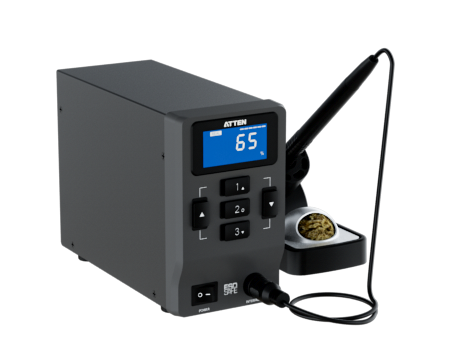
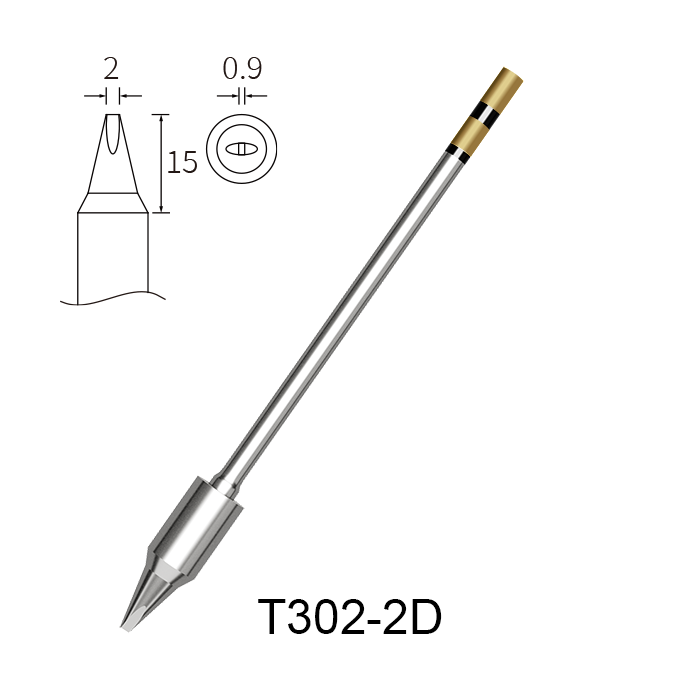
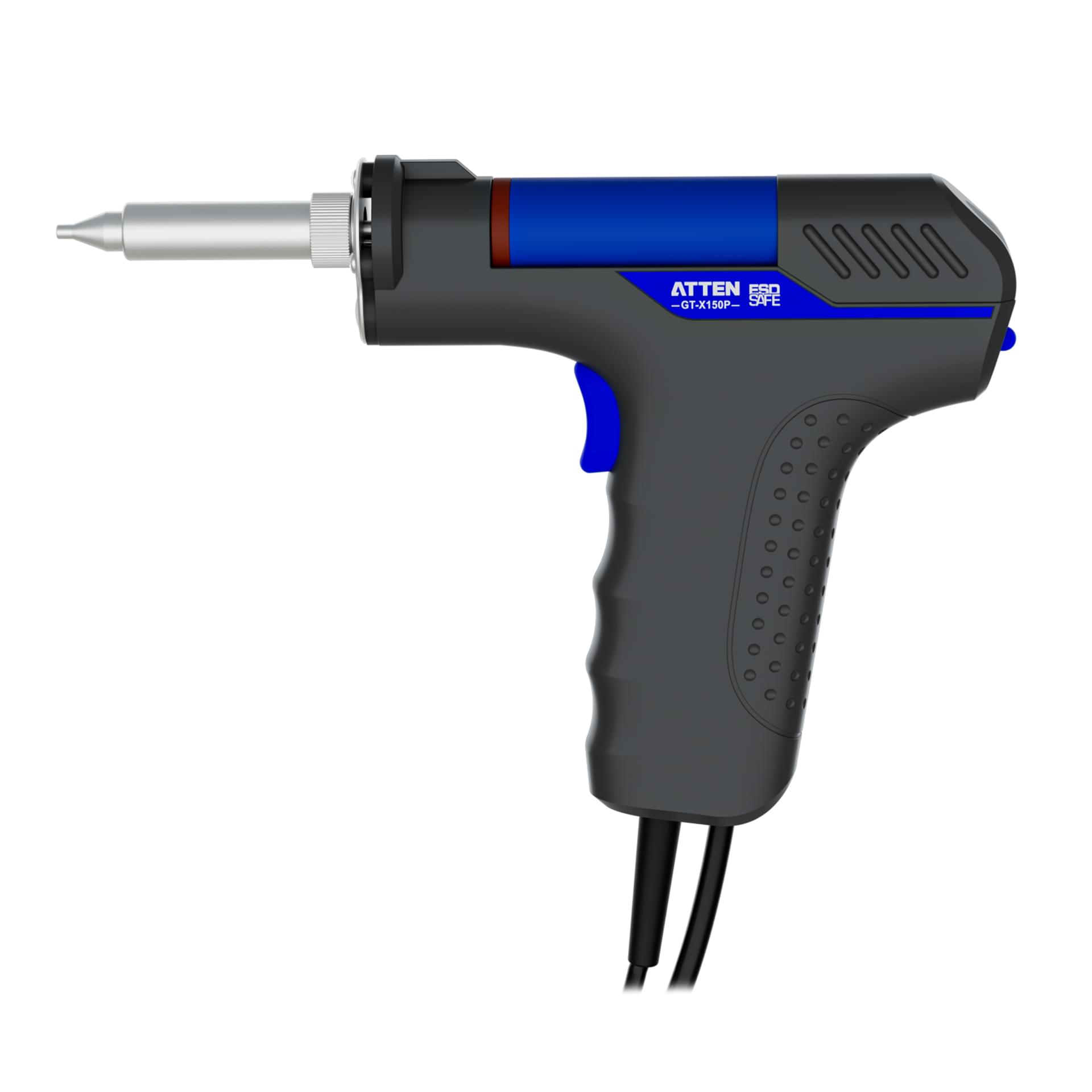
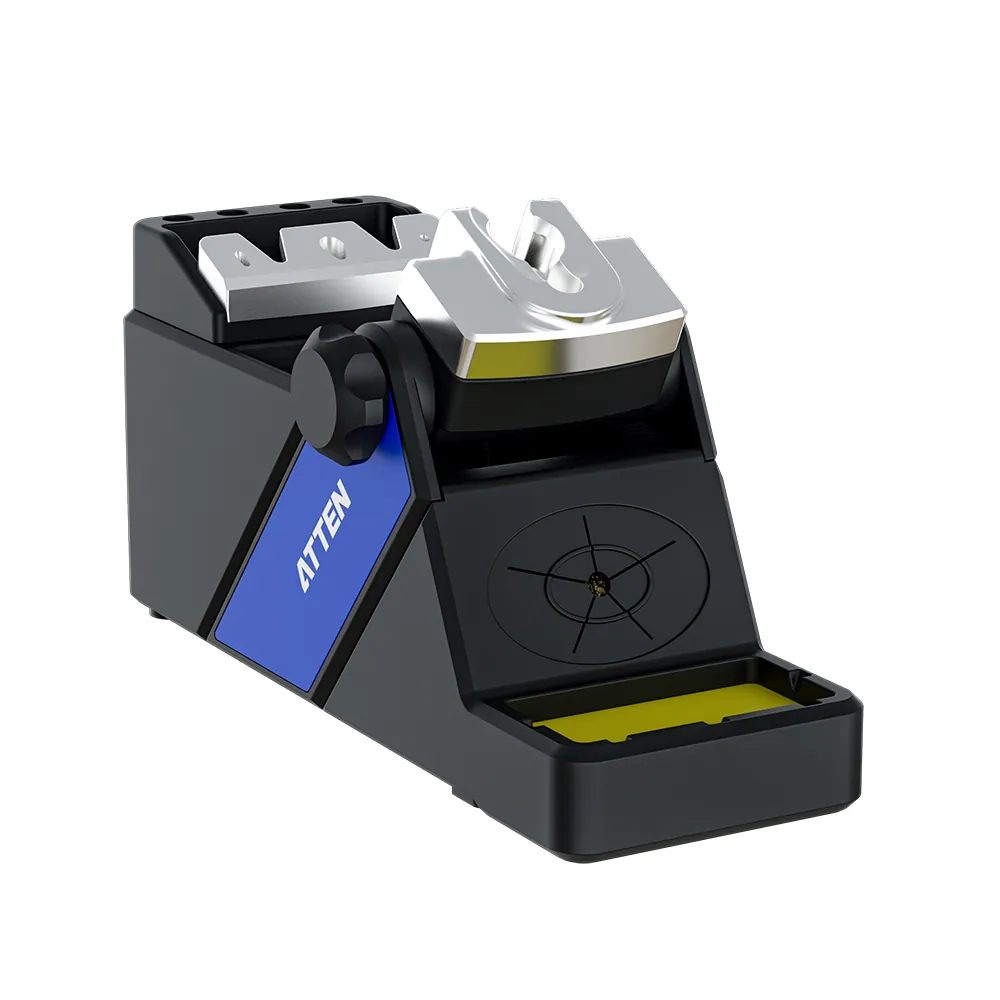
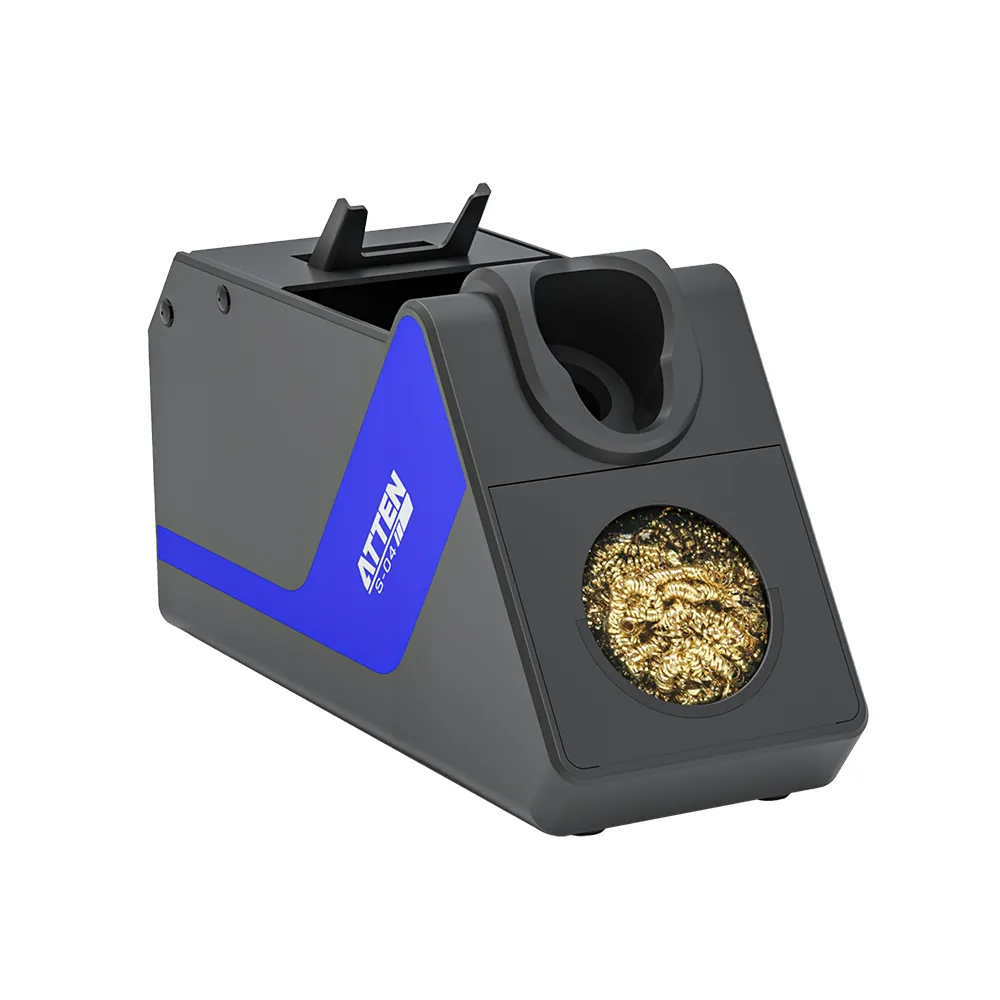
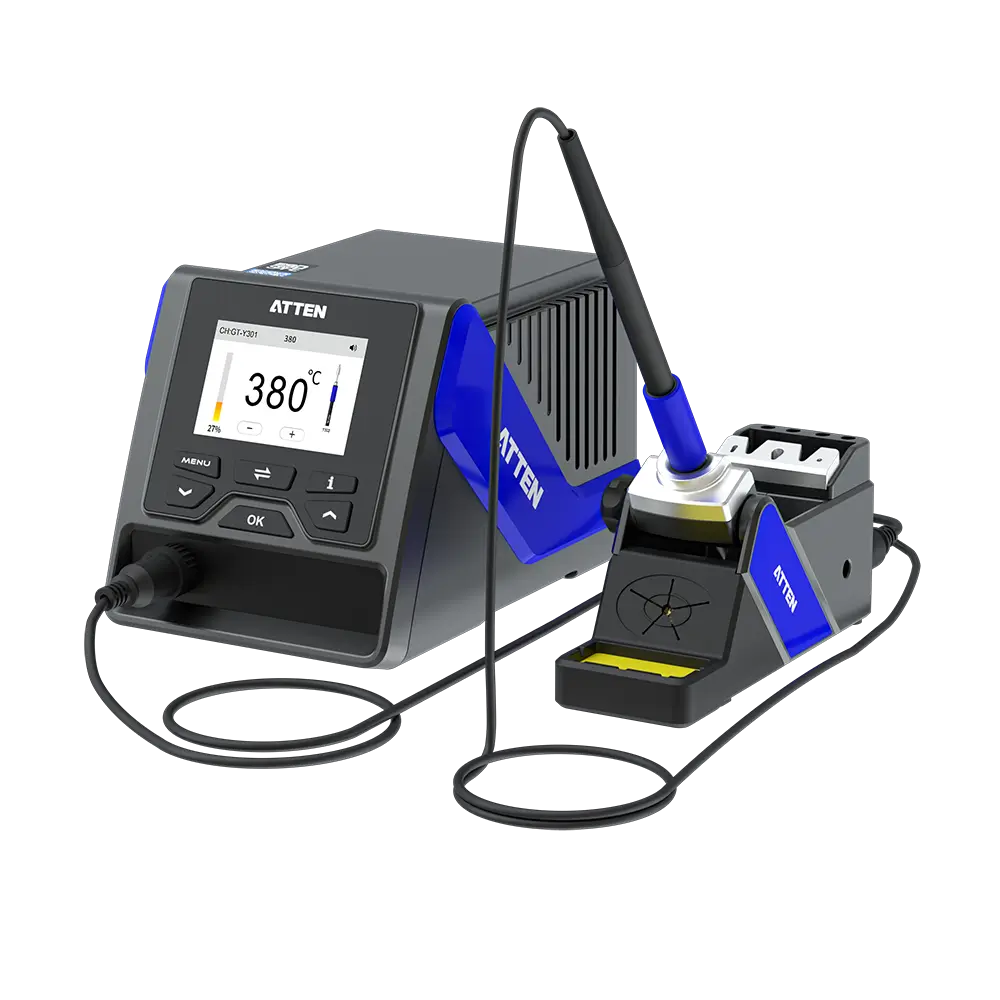
Tip series matching is about more than whether a tip slides onto a handle. A series defines the heater interface, the thermal path, the range of available shapes, and the mass of the tip body. When a technician changes series, the heat transfer behavior can change even if the tip shape looks similar. That is why series matching belongs in the same conversation as geometry and contact area. The ATTEN GT-6300 is a single-channel intelligent soldering station officially positioned as heavy-duty high-power, and the official product facts recommend T156 series and T302 series tips, a GT-Y301 handle, and an S-28 iron stand. Those recommendations are confirmed accessory facts for that station, not a universal rule for every soldering setup. For a soldering station manufacturer or supplier, the recommended tip series is part of how the thermal system is put together. A technician who understands that connection can make better choices when a heavy joint refuses to flow. Before changing tip series, it helps to know the handle and heater interface, the range of shapes in the new series, and whether the new tip mass matches the joint size. A tip series that is too light for a heavy pad will recover slowly. A series that is too large for fine work can slow down a technician on small joints. Matching the series to the work keeps heat transfer predictable and keeps the tip seated correctly, which protects both the tip and the station.
High thermal capacity joints do not fail because the iron is simply too cold. They challenge the whole heat path from the heater to the solder. Tip geometry sets the contact area, thermal bridging carries heat across that contact, and tip mass helps the tip recover between heavy joints. Series matching keeps those factors working together instead of fighting each other. For technicians who work on large pads and heavy copper, tip selection is a heat transfer decision first. ATTEN Soldering Equipment provides an example of how a heavy-duty station and its recommended tip series are presented as a matched system, and a closer look at the official product facts can help readers compare that setup with their own bench needs.
A: Tip geometry sets how much of the tip touches the joint and how large the thermal path is inside the tip. A wider face, such as a chisel or knife, spreads heat across a larger pad and helps form a broad thermal bridge. A fine point concentrates heat at a small spot and often struggles to replace heat as fast as a heavy joint removes it. The shape also changes the metal mass behind the working face, which affects how quickly heat arrives and how the tip recovers.
A: T156 and T302 appear in heavy-duty soldering setups because they are recommended tip series for specific high-power stations, including the ATTEN GT-6300. They are confirmed accessory recommendations for that station, not universal requirements. In a heavy-duty setup, the tip series needs to match the handle, heater interface, and expected joint size so the tip can carry heat efficiently. When a station is positioned for high thermal capacity work, the recommended series is part of the thermal package.
A: Before changing tip series, a technician should understand the handle and heater interface, the available shapes and tip masses in the new series, and the size of the joints the tip will face. A series that fits the handle but has a different thermal path can change heat transfer on heavy pads. It also helps to check whether the station manufacturer or supplier lists a recommended series for that model. Matching the series to the work keeps contact, thermal bridging, and recovery predictable.
WORKMANSHIP STANDARD FOR SURFACE MOUNT TECHNOLOGY
ECE Safety Program - Elmore Family School of Electrical and Computer Engineering - Purdue University
ATTEN GT-6300 Intelligent Soldering Station

Copyright © 2025 SHENZHEN ATTEN TECHNOLOGY CO., LTD All Reserved.