Introduction: Stable heat, calibrated tips, and traceable soldering data reduce rework, scrap, and avoidable energy use in lead-free PCB assembly.
RoHS compliance removes a restricted material from the solder alloy, but it does not automatically remove waste from the production process. In lead-free assembly, small changes in tip condition, thermal recovery, contact area, and operator technique can determine whether a joint is completed once or returned for rework. Each extra heating cycle consumes energy, adds labor, and increases the risk of damaging a board or component. Precision soldering therefore deserves a place in environmental discussions. The aim is not to treat equipment as a sustainability slogan, but to show how calibrated heat, clear maintenance practices, and traceable process data can reduce resource loss at the bench.
Lead-free alloys generally demand tighter process control than traditional tin-lead systems. The setpoint on a soldering station describes the sensor side of the system, while the actual joint receives heat through a chain that includes the heater, tip body, protective coating, solder film, pad, and component lead. A defective tip or an oxidized working surface can make a correctly displayed temperature behave like a cold iron. The result is predictable: longer dwell time, repeated attempts, raised setpoints, or component damage. RoHS has reduced the use of hazardous substances, yet manufacturers still need process stability to turn that compliance gain into fewer defects, less rework, and lower material consumption.
Guesswork rarely appears as a single visible failure. It appears as small decisions made throughout the day. An operator applies more pressure because solder does not flow. A technician raises the temperature because a ground plane feels cold. A supervisor accepts a marginal joint because the production target is close. These actions may solve the immediate task, but they consume extra energy and time and raise the probability of scrap, rework, or a field failure. The environmental cost includes wasted PCB laminate, discarded components, replacement tips, packaging, transport, and labor. Quality failures are therefore environmental failures as well as commercial ones. A repeatable soldering process reduces all of these losses at the same time.
Beneath the broad goals of quality and efficiency are several variables that procurement teams can evaluate directly.
Temperature stability and thermal recovery matter more than a wide nominal range. A station must deliver heat quickly when the tip contacts copper, then recover before the next joint. Stable recovery supports consistent wetting and reduces the need to compensate with excessive temperature or dwell time.
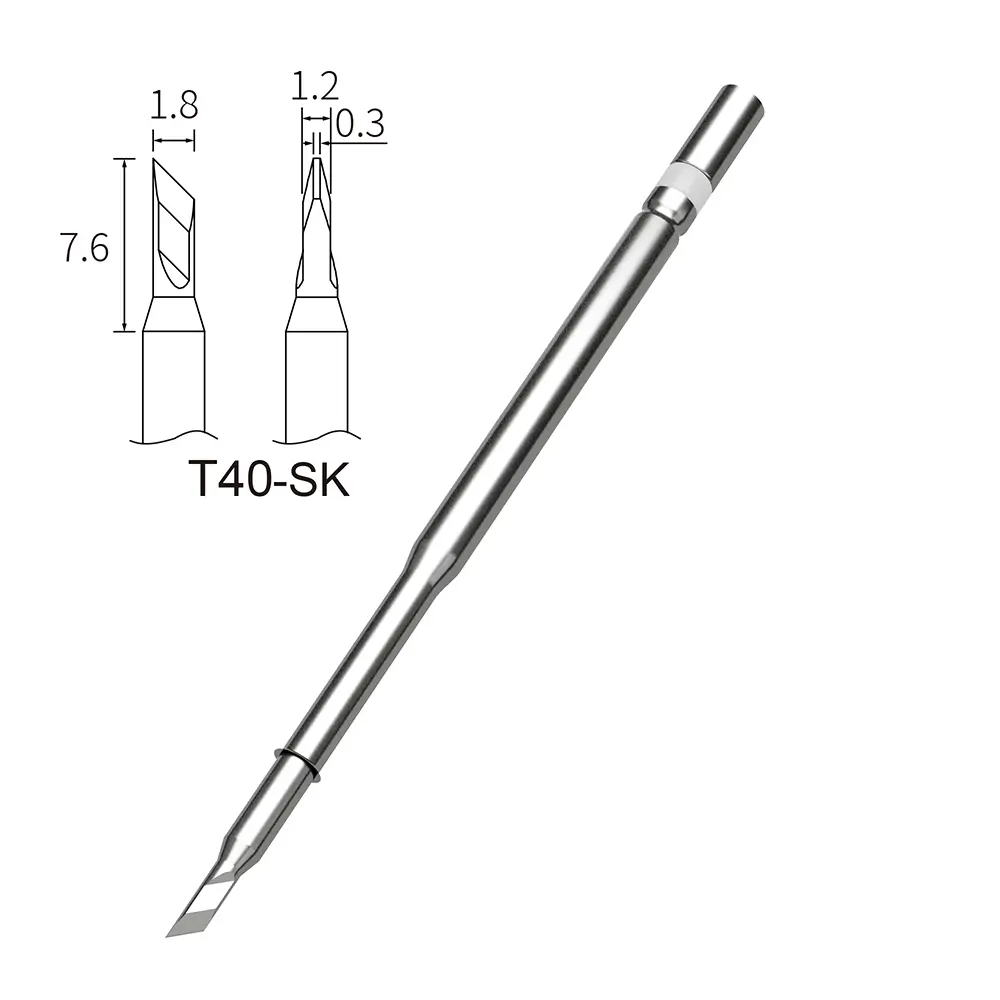
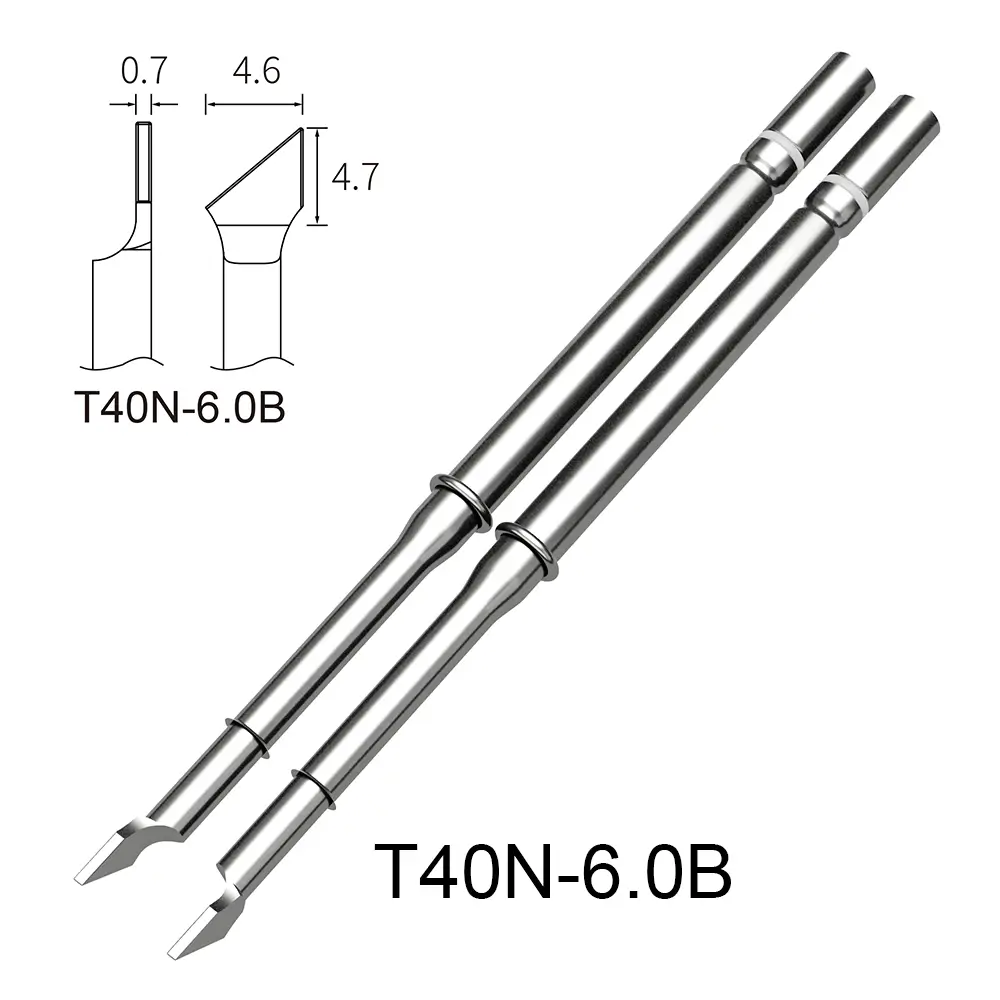
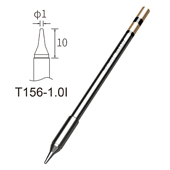
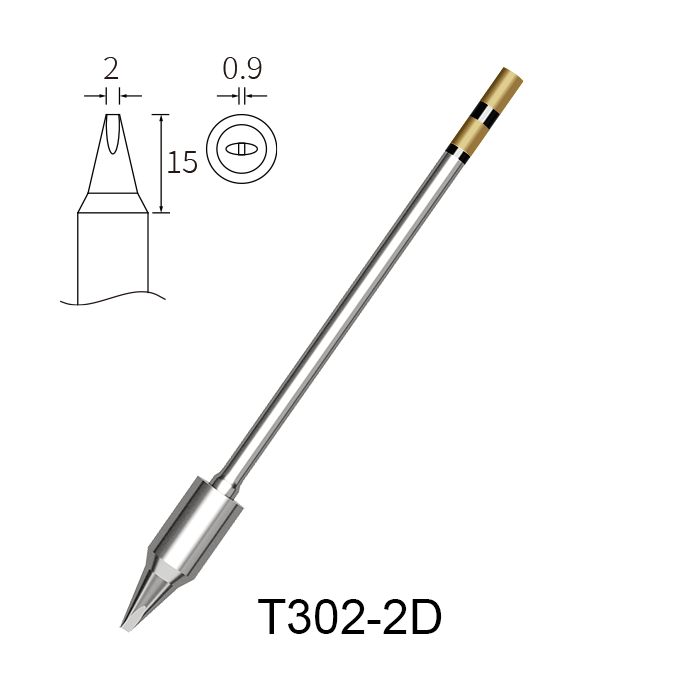
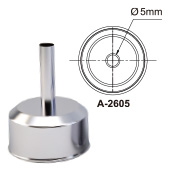
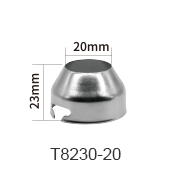
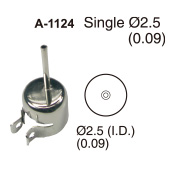
Tip condition sits directly in the heat path. Oxidation creates a non-wettable surface, preventing the thin solder film that normally bridges microscopic gaps and transfers heat. Wear reduces contact area and changes geometry. Automatic tip recognition and calibration help keep different tips aligned with the intended process, while scheduled inspection prevents a damaged tip from becoming a hidden source of rework.
Operator consistency is another environmental variable. Two technicians can use identical equipment and still produce different results if their contact angle, dwell time, and tip selection vary. Shared profiles, clear work instructions, and equipment that is easy to set correctly reduce that variation without relying entirely on individual experience.
Data visibility determines how quickly a team can detect drift. Real-time temperature and power information, maintenance records, and error logs can reveal a degrading heater, an unsuitable tip, or a process setting that no longer matches the board. This information converts maintenance from a calendar ritual into an evidence-based decision.
Standby behavior affects both energy use and consumable life. A tip left hot and dry oxidizes faster and consumes power while producing no value. Automatic standby after the handle returns to its holder limits idle exposure, slows oxidation, and reduces replacement frequency. The benefit depends on work patterns, but the principle is straightforward: reduce time at temperature when the tool is not making a joint.
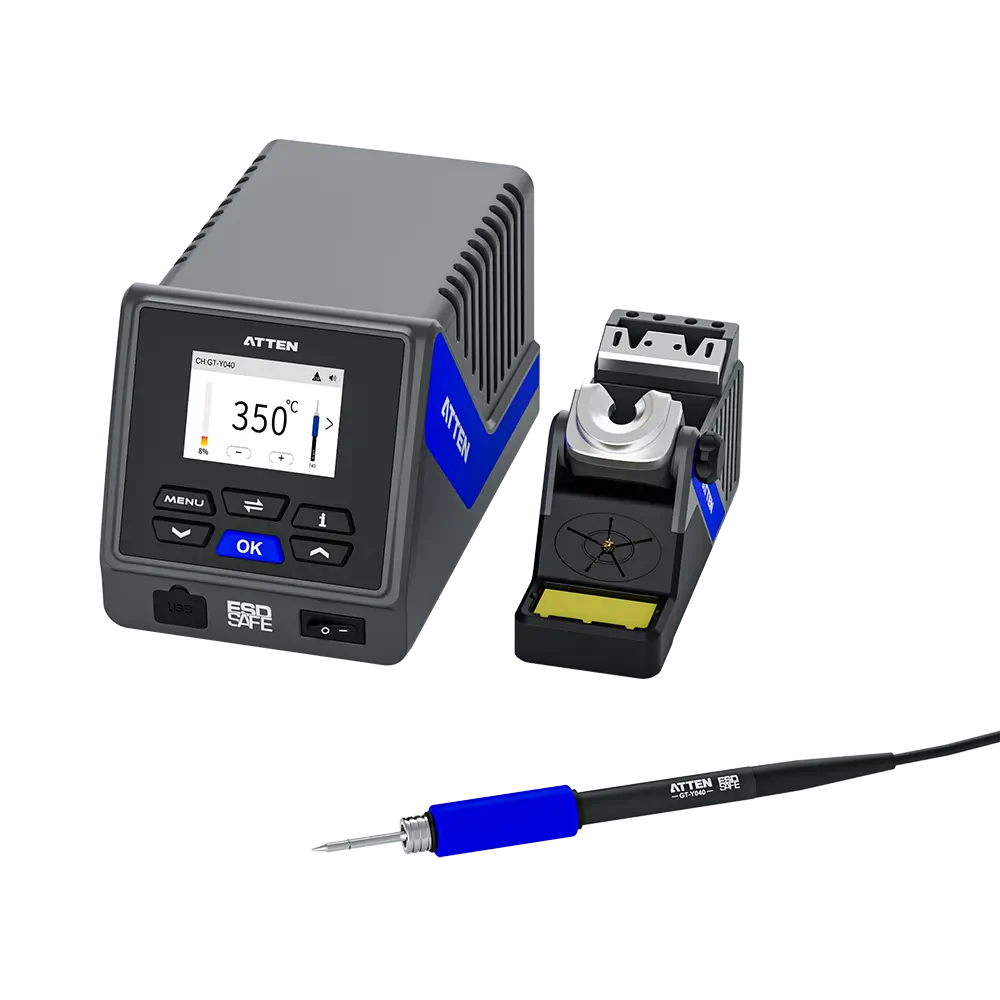
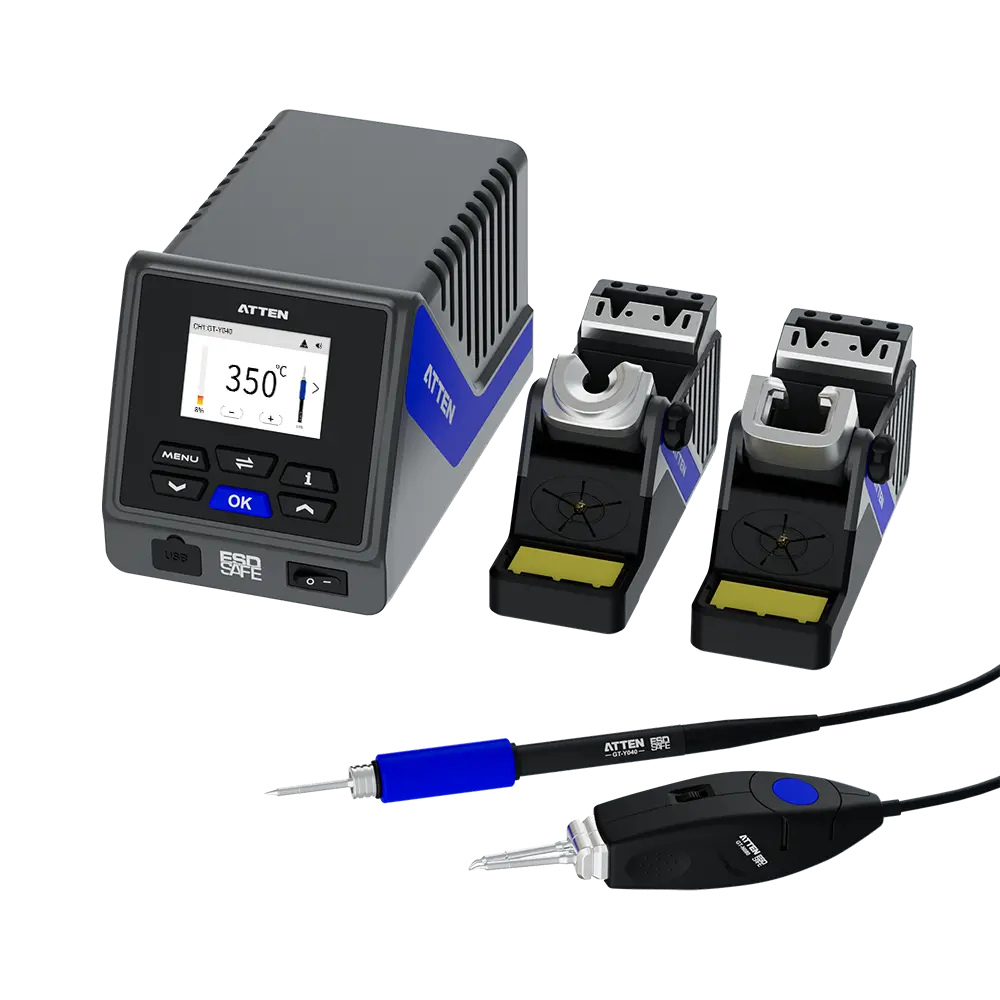
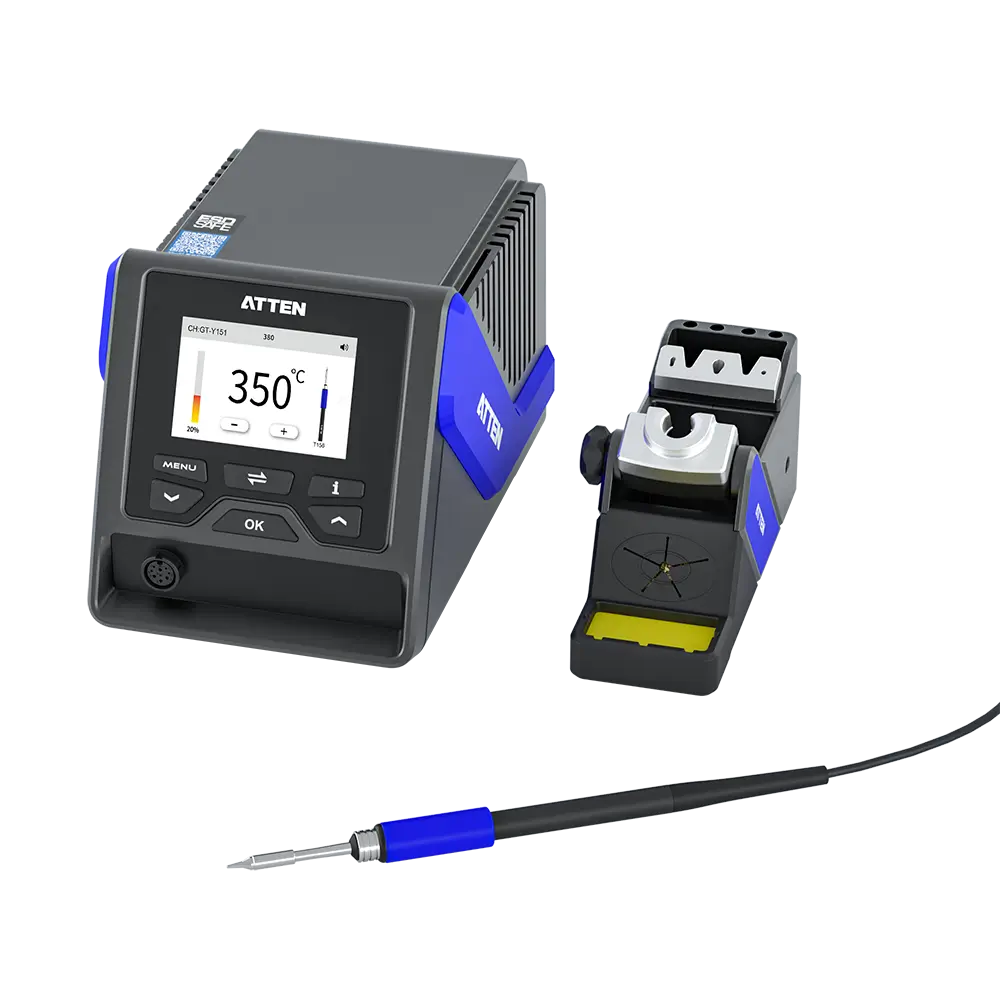
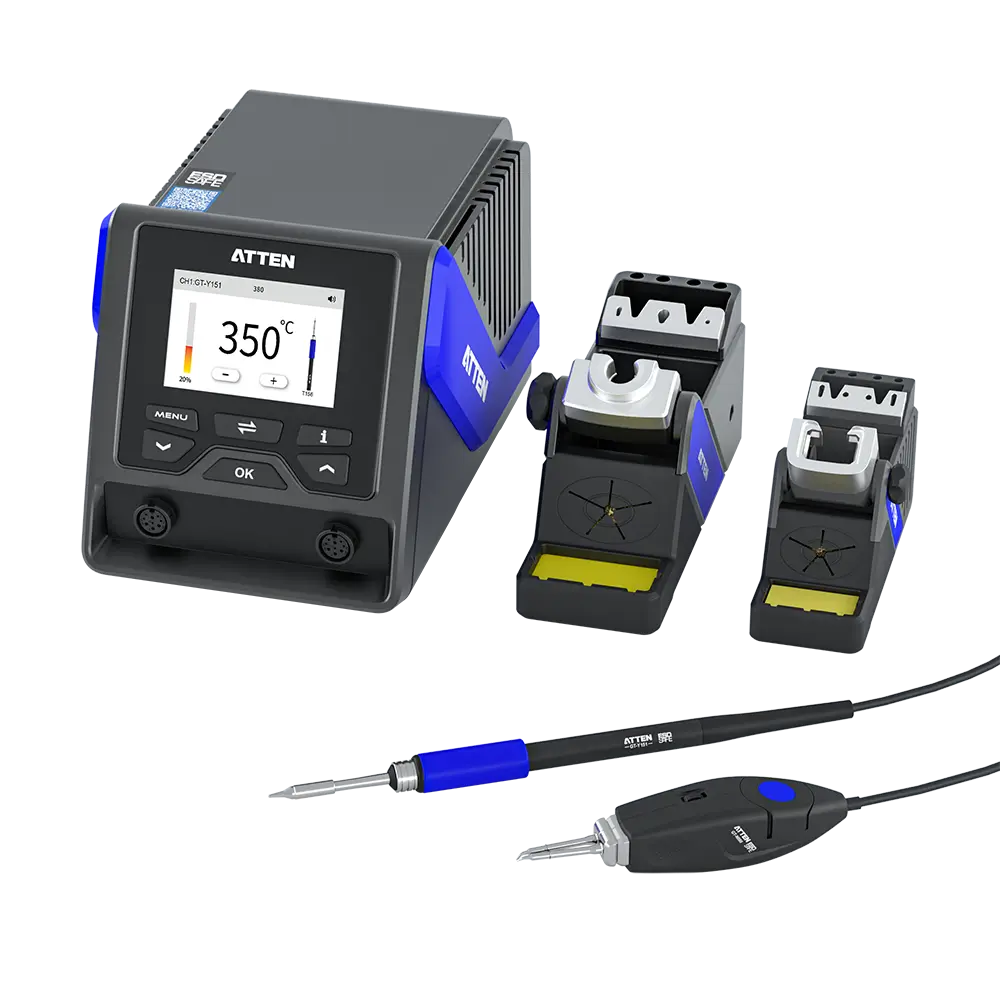
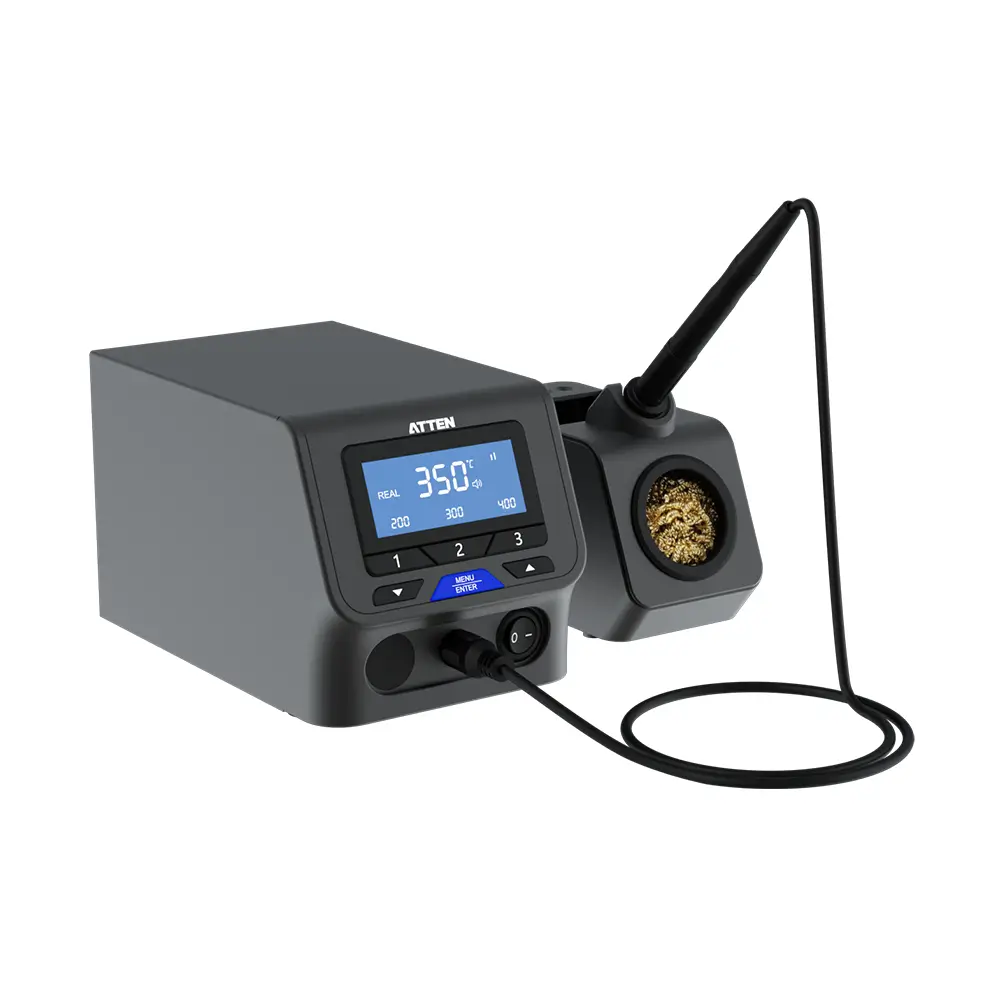
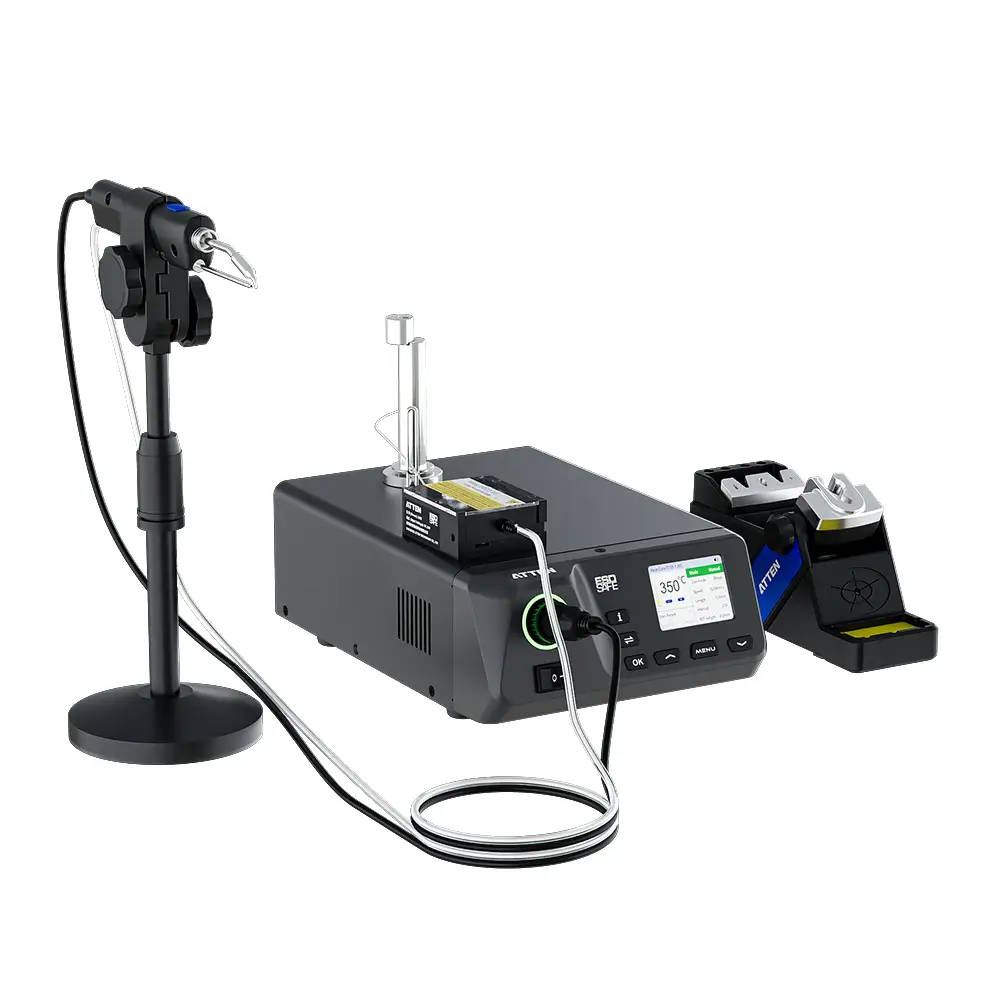
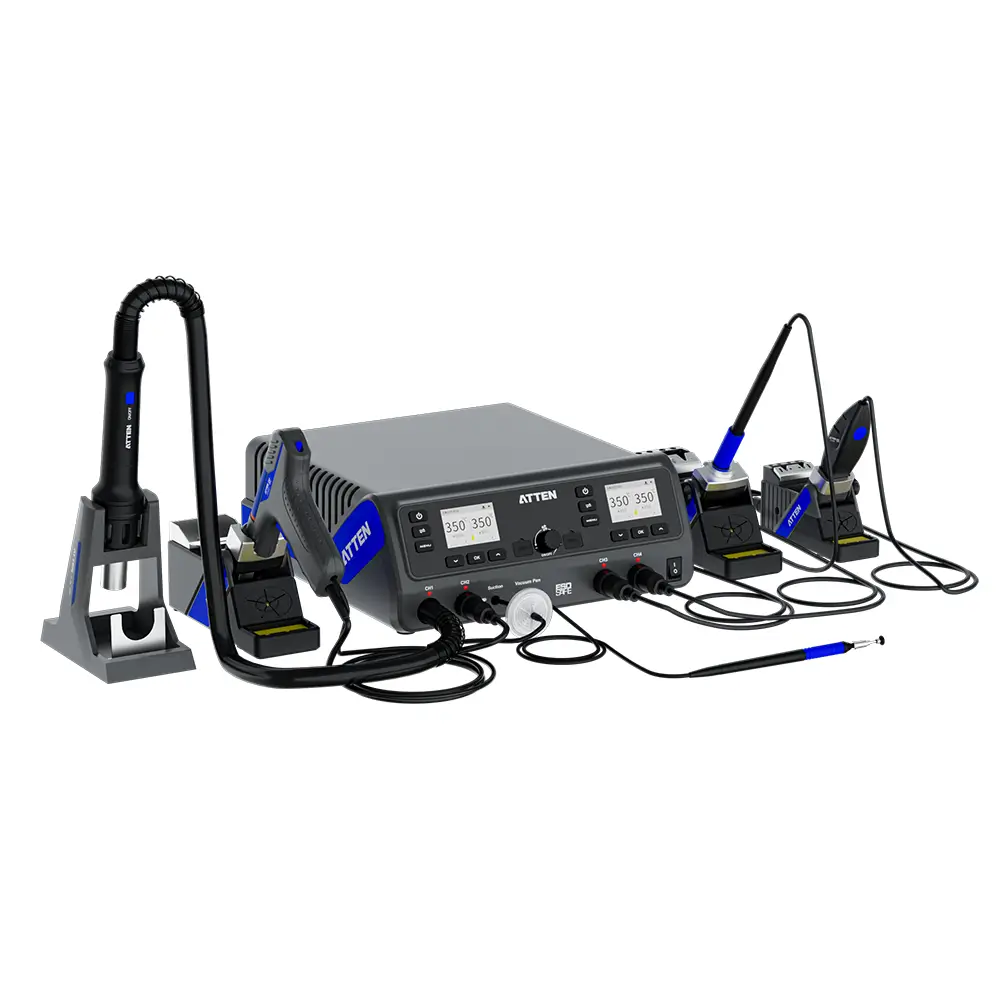
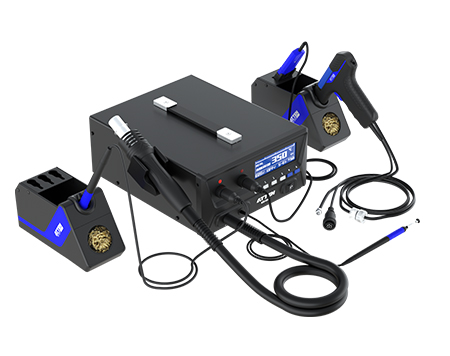
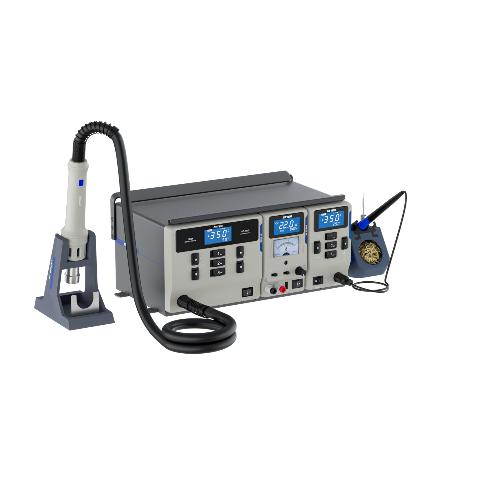
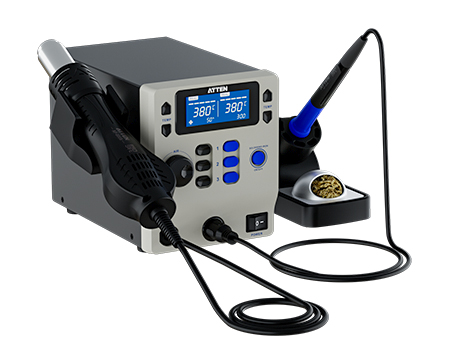
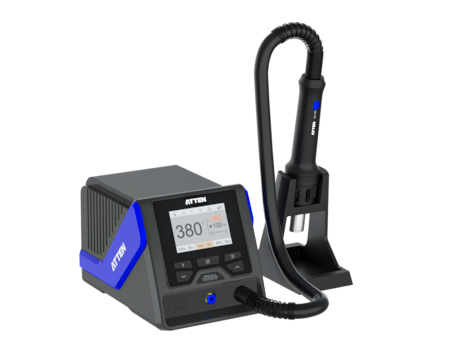
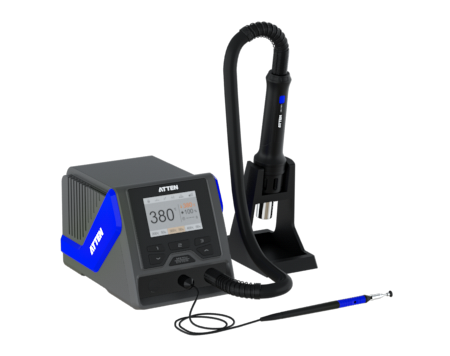
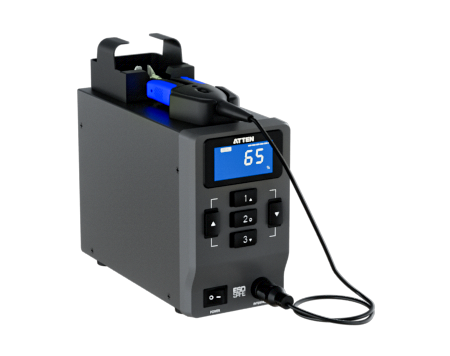
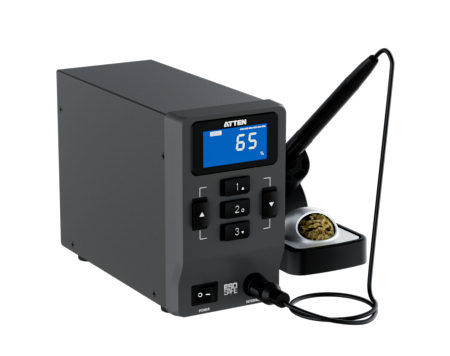
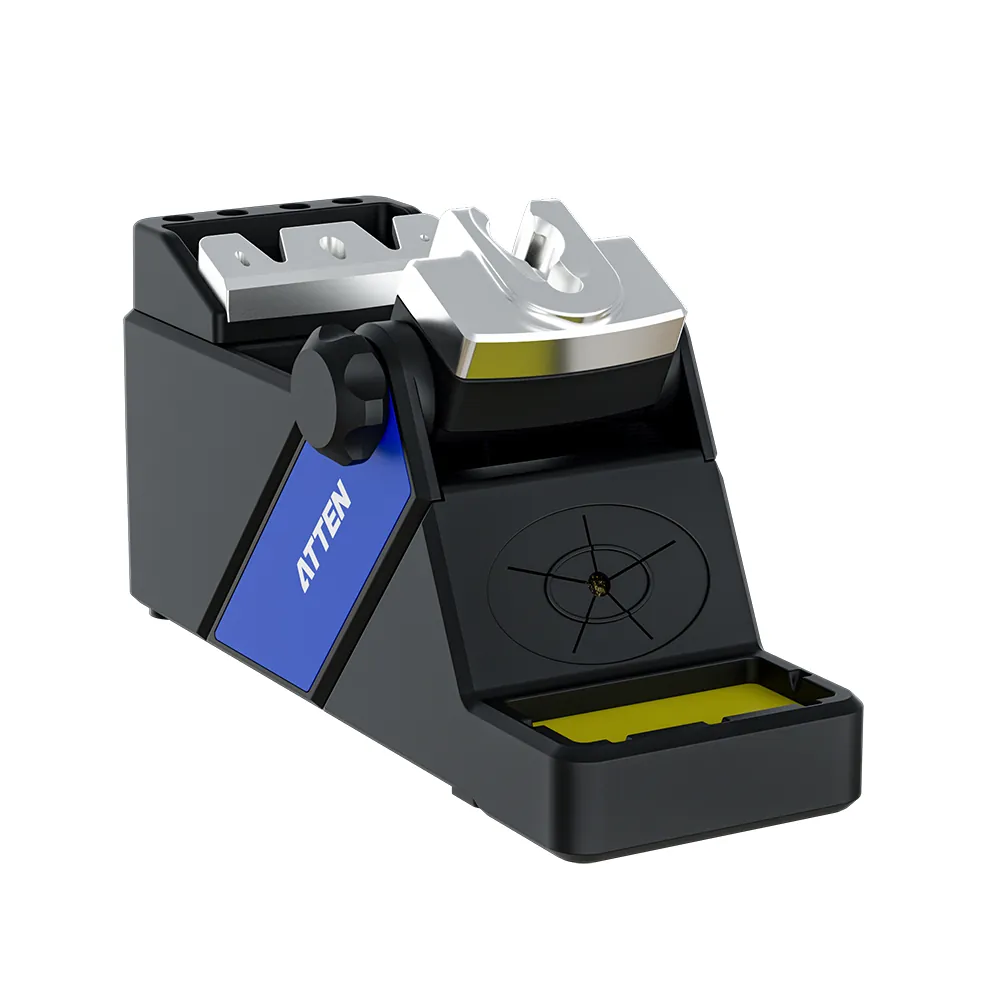
An intelligent soldering platform can connect the variables above into one operating system. One example is ATTEN's GT-6120 intelligent soldering station. The manufacturer describes a dual-channel 130 W platform with a temperature range from 80 C to 500 C, automatic tip recognition, calibration functions, real-time temperature and power monitoring, and RS485 or IoT communication.
Dual-channel capability allows one host to support different handles or work positions, which can reduce the number of separate stations required in a high-mix workshop. Better equipment utilization does not guarantee lower energy use, but it can avoid duplicating power supplies, bench space, and control hardware when the workload does not justify another full station.
Tip recognition and calibration reduce the likelihood that an operator will use the wrong thermal profile. Real-time monitoring can reveal when the heater is slow to recover or when power demand changes. In a quality management system, that information can support preventive maintenance and help identify a process drift before it creates a batch of questionable joints.
The GT-6120 also specifies tip-to-ground resistance below 2 ohms and tip-to-ground potential below 2 mV. Those figures matter because ESD damage can remain hidden until a board reaches test or field service. Preventing that damage avoids replacement parts, repeated testing, and additional transport.
Standby behavior completes the operating picture. The product documentation states that placing the handle in its holder activates the standby function. This reduces heat exposure during pauses and helps protect the tip from unnecessary oxidation.
These features do not make any soldering station environmentally neutral. They do, however, give buyers a practical way to connect precision, maintenance, safety, and resource efficiency with measurable equipment functions.
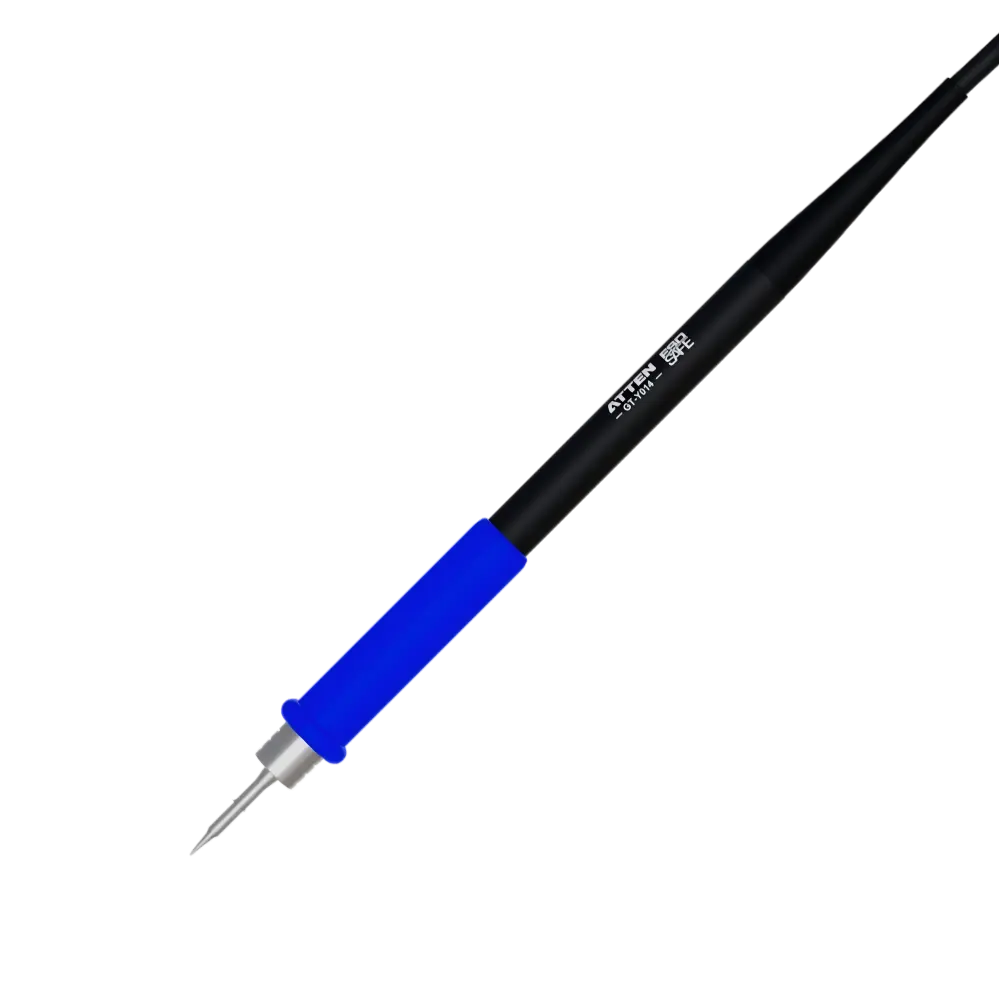
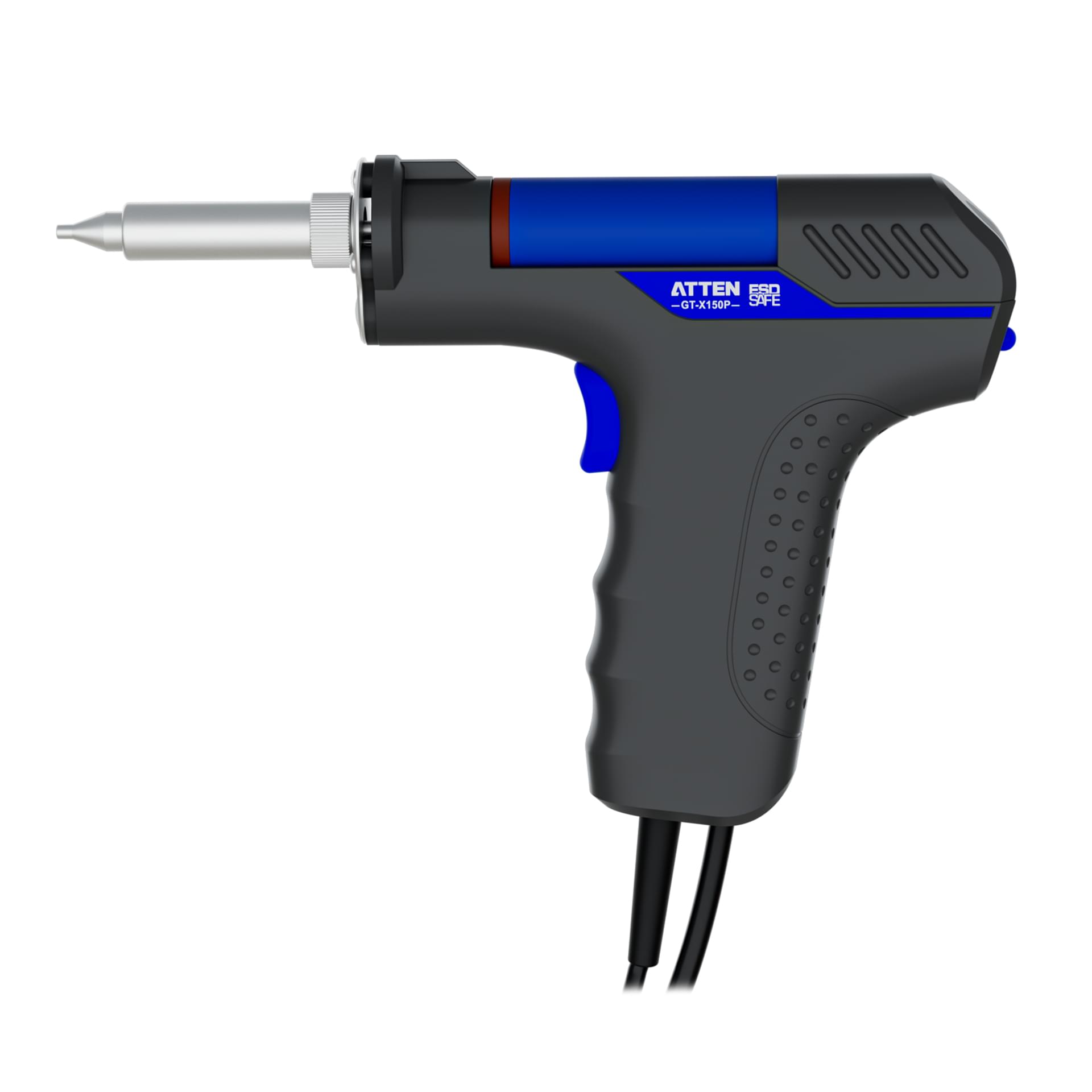
High-mix production is where the limits of guesswork become most visible. A lab may solder a through-hole connector, replace a fine-pitch component, and rework a ground plane on the same bench. Each task needs a suitable tip, a stable heat path, and a repeatable contact technique. A station that recovers quickly and accepts multiple handle or tip configurations can reduce the time spent adjusting equipment between jobs.
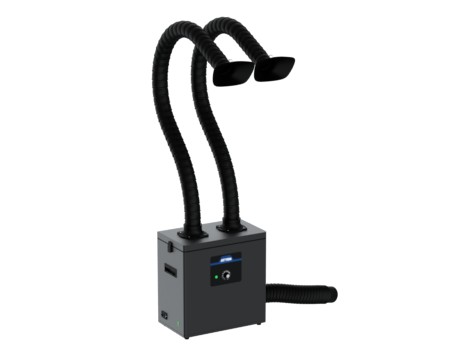
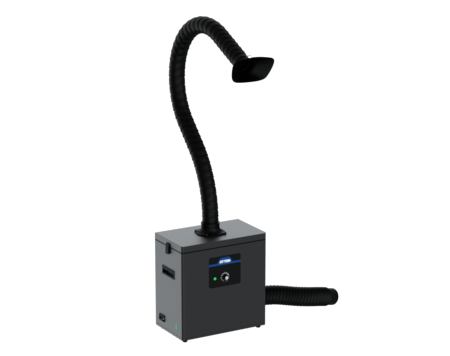
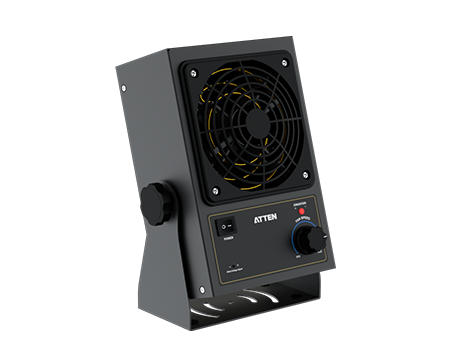
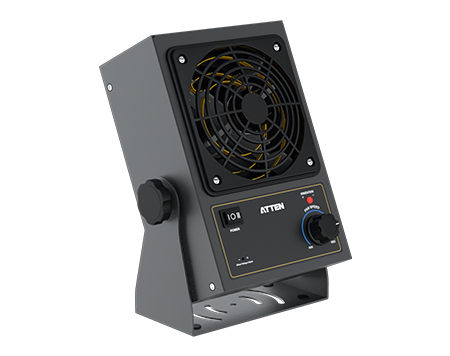
Clean airflow and grounding are equally important in this setting. A soldering station should not be treated as a complete environmental solution on its own. Fume extraction, ESD-safe surfaces, wrist straps, and a tidy bench layout work together to keep the operator protected and the board stable. The equipment choice should therefore be evaluated as part of a workstation system rather than as an isolated product.
Procurement teams can use the following checklist to separate meaningful process capability from generic environmental language.
1. Confirm that the temperature range and recovery behavior match the intended lead-free alloys and board assemblies.
2. Verify automatic tip recognition, calibration, and profile controls rather than relying only on manual settings.
3. Check tip availability, geometry, and compatibility with the work the team performs most often.
4. Review temperature, power, error, and maintenance data that can be recorded through software or industrial interfaces.
5. Ask for ESD performance data, including tip-to-ground resistance and potential under defined test conditions.
6. Confirm that standby behavior reduces idle heat and does not interfere with normal production recovery.
7. Evaluate service manuals, spare parts, calibration procedures, and local technical support before purchase.
8. Treat company-level RoHS, WEEE, REACH, and quality certifications as supporting evidence, not as proof of product performance.
9. Compare the full lifecycle cost, including energy, tips, handles, maintenance, downtime, and end-of-life disposal.
Sustainability claims should be verified at the same level as quality claims. A power rating does not describe real energy consumption in every work pattern. A standby feature does not prove savings unless the idle period is common and the recovery behavior is acceptable. An ESD figure may be measured under specific conditions. Buyers should request test methods, product documentation, and maintenance intervals, then compare those details with their own production data.
A: Lead-free solder removes lead from the alloy, but it does not guarantee lower total environmental impact. Higher processing temperatures, poor thermal recovery, and rework can offset the benefit. Process control is what converts material compliance into less waste.
A: Calibration keeps the actual tip temperature closer to the intended process setting. A stable thermal path reduces repeated heating, scrapped joints, premature tip replacement, and the energy used by unnecessary rework.
A: Standby lowers heat exposure during idle periods. That can reduce electricity consumption and slow tip oxidation. The value depends on how often the station is idle and how quickly it must recover when work resumes.
A: Temperature stability, power demand, calibration records, fault logs, and maintenance dates are useful. These records help teams detect drift, schedule service, and estimate how often poor heat delivery contributes to rework or scrap.
A: No. A dual-channel platform may reduce duplicate equipment and improve utilization, but energy use still depends on workload, standby settings, and operator behavior. It should be selected when shared capacity matches actual production demand.
A: Buyers should verify test conditions, product-level documentation, certification scope, service requirements, and measurable outcomes such as temperature recovery or ESD performance. Generic environmental language is not a substitute for evidence.
Sustainable PCB assembly depends on repeatability before it depends on slogans. A stable heat path, a clean and correctly calibrated tip, disciplined operator behavior, and useful process data all reduce the probability that a joint must be heated again. These actions lower energy and material losses while improving quality.
ATTEN's GT-6120 intelligent soldering station illustrates how one dual-channel platform can combine tip recognition, calibration, real-time process monitoring, industrial communication, ESD control, and automatic standby within a single workstation. The value is not that the equipment makes sustainability automatic. The value is that it gives manufacturers clearer control over the variables that create waste. For procurement teams comparing intelligent soldering stations against sustainability and lifecycle criteria, ATTEN's GT-6120 provides a practical reference point for evaluating whether precision, data visibility, and long-term maintenance can be addressed on the same workbench.
RoHS Directive
Link:
https://environment.ec.europa.eu/topics/waste-and-recycling/rohs-directive_en
Note: The European Commission explains the restricted-substance rules that shape lead-free electronics manufacturing.
Waste from Electrical and Electronic Equipment
Link:
Note: This official overview connects electronics design, collection, recycling, and resource efficiency goals.
Electronics Donation and Recycling
Link:
https://www.epa.gov/recycle/electronics-donation-and-recycling
Note: The EPA guidance provides a practical reference for extending product life and managing electronic equipment at end of life.
GT-6120 Intelligent Soldering Station
Link:
https://www.atten.com/products-detail/id-159.html
Note: The product page provides the specifications, accessories, hardware interfaces, and workstation features referenced in the article.
Workplace Safety and Environment Equipment
Link:
https://www.atten.com/products/cid-84.html
Note: This category page shows how fume extraction and ESD protection fit around professional soldering workstations.
About ATTEN
Link:
https://www.atten.com/about.html
Note: The company profile identifies the manufacturer, product scope, markets, and organization-level compliance information.
Soldering Iron Tip Coatings and Heat Transfer in Daily Use
Link:
https://www.exportandimporttips.com/2026/09/soldering-iron-tip-coatings-and-heat.html
Note: This required reading explains how coatings, oxidation, wetting, and wear affect the thermal path between the heater and the solder joint.
Intelligent Soldering Stations for Hardware R&D Lab Bench Work
Link:
https://www.commerciosapiente.com/2026/09/intelligent-soldering-stations-for.html
Note: This required reading connects soldering performance with bench layout, airflow, grounding, and prototype work practices.
How to Solder: Through-Hole Soldering
Link:
https://learn.sparkfun.com/tutorials/how-to-solder-through-hole-soldering/all
Note: The guide explains the basic heat, wetting, and solder-feed sequence used in repeatable hand soldering.
Common Soldering Problems
Link:
https://learn.adafruit.com/adafruit-guide-excellent-soldering/common-problems
Note: The reference illustrates oxidation, poor wetting, cold joints, and other defects that can lead to rework.

Copyright © 2025 SHENZHEN ATTEN TECHNOLOGY CO., LTD All Reserved.